At The Spine Center in Las Vegas, spinal rehabilitation may involve several treatments depending on what a patient is dealing with. Rather than relying on a single approach, the team can combine spinal decompression, computerized adjustments, electrical stimulation, and rehabilitation exercises. The idea is to help patients manage their pain while also working on movement and everyday activities.
Key Takeaways
- The Spine Center uses four main approaches to spinal rehabilitation: spinal decompression, ProAdjuster 360 adjustments, electrical stimulation, and exercises tailored to the patient’s needs.
- A 2025 research overview examining 50 systematic reviews reported moderate to large improvements in disability outcomes for people with chronic lower back pain who participated in integrated treatment programs.
- Exercise is the phase most closely linked to preventing future episodes.
- Every plan starts with an individualized evaluation, not a preset package.
Why Recovery Stalls When Only One Thing Is Treated
Most people who come to us after a car accident, a lifting injury at work, or years of low back pain have already tried something. Maybe it was a few adjustments, a round of over-the-counter pain relievers, or a stretching video.
Those efforts often help for a while. Then the stiffness returns, because the spine was calmer but no stronger.
That gap is what a structured program at our spinal rehabilitation center in Las Vegas is designed to close. Here is what that program involves, modality by modality.
What Does a Spinal Rehabilitation Center Actually Do?
A spinal rehabilitation center evaluates how your spine moves, identifies what is limiting it, and then applies several non-invasive therapies in sequence to reduce pain, restore motion, and rebuild stability. The difference from a single-service visit lies in coordination: each treatment is chosen for a specific job within a customized treatment plan.
Which Therapies Are Included in Spinal Rehab at The Spine Center?
The Spine Center’s spinal rehab program draws on four core modalities: spinal decompression on DOC traction tables, ProAdjuster 360 computerized adjustments, electrical stimulation, and therapeutic rehabilitation exercise. Massage therapy and therapeutic ultrasound may be added when soft tissue tension or inflammation is slowing progress. Not every patient receives every therapy.
| Modality | Primary Role | Typical Phase |
|---|---|---|
| Spinal decompression | Reduces pressure on discs and nerve roots | Early |
| ProAdjuster 360 | Measures and restores joint motion | Early to middle |
| Electrical stimulation | Calms pain and muscle guarding | Early |
| Therapeutic exercise | Builds strength, endurance, and stability | Middle to long term |
Spinal Decompression
Decompression uses a motorized traction table to lengthen the spine in controlled cycles gently. The goal is to reduce pressure on irritated discs and nerve roots, which is why it is often used for disc herniations and sciatica.
We cover the disc-specific side of this therapy in more depth in our guide to how spinal decompression therapy treats severe sciatica and disc herniations.
ProAdjuster 360 Computerized Adjustments
The ProAdjuster 360 analyzes joint motion using a computerized sensor and then delivers precise, low-force adjustments based on the data. Patients who are uneasy about manual manipulation often find this gentle, evidence-based therapy more comfortable.
Electrical Stimulation
During this treatment, small pads are placed on your skin to deliver gentle electrical pulses to the affected area. Some patients find that it helps ease discomfort and muscle tension, making it a little easier to move around.
We may use electrical stimulation alongside other treatments to help manage pain while you’re recovering. It’s generally intended to provide temporary relief rather than take the place of exercises and other rehabilitation work.
Therapeutic Rehabilitation Exercise
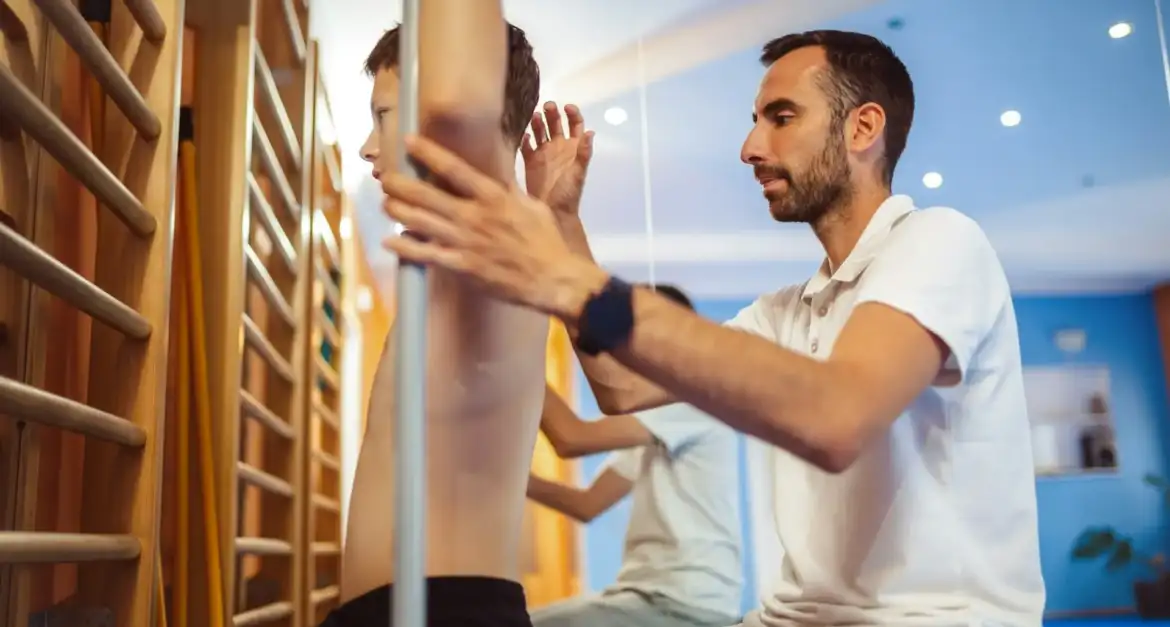
Getting your strength and movement back takes practice, both during appointments and at home. Depending on your injury, we may work on improving flexibility, building core strength, or strengthening muscles that have become weaker.
Your therapist will walk you through the exercises during your visits and show you what you can safely continue at home. As you improve, the routine can be adjusted to match your progress.
This phase directly supports movement restoration and is the one patients carry with them after formal care ends.
Why Do Combined Therapies Tend to Hold Up Better Over Time?
When someone has ongoing lower back pain, treating the discomfort is only part of the process. Muscle weakness and difficulty controlling certain movements may also need attention. That’s why a treatment plan might include several approaches. Decompression or electrical stimulation may be used to help manage symptoms, while exercises focus on improving strength and stability. Research on chronic lower back pain suggests that combining different types of care may be more effective than relying on a single treatment.
A 2025 overview published in the Journal of Bodywork and Movement Therapies looked at 50 systematic reviews involving 1,096 randomized trials and more than 124,000 participants. The researchers found that programs that combined physical treatment, patient education, and psychological support were associated with moderate-to-large improvements in disability. Based on those findings, they recommended considering a combination of treatments when caring for people with chronic lower back pain.
There are still some gaps in the research, though. The authors noted that much of the evidence was considered low certainty, and relatively few studies followed patients long enough to understand how often their pain returned.
There’s also a reason to be cautious about depending on a single treatment. A Cochrane review examining traction for lower back pain found little evidence of meaningful benefit when used on its own. At our clinic, decompression is offered as one part of a broader care plan rather than the only treatment a patient receives.
The strongest long-term signal comes from exercise. A meta-analysis in JAMA Internal Medicine found that exercise combined with education reduced the risk of a new low back pain episode by roughly 45 percent over the following year. The authors added that the protective effect likely depends on continuing to exercise.
Clinical guidelines point the same direction. The Canadian Chiropractic Guideline Initiative recommends a multimodal approach that includes spinal manipulation, exercise, and self-management advice for both acute and chronic back pain.
What Happens During a Rehabilitation Assessment?
A rehabilitation assessment is a detailed evaluation of your history, posture, range of motion, strength, and neurological signs. It determines whether rehab is appropriate, which modalities are appropriate for your condition, and the order in which to introduce them. If findings suggest a condition that needs medical imaging or specialist care, you will be referred.
People often ask how many visits they will need. That question has no honest answer before the exam, because the same diagnosis can behave very differently in a 30-year-old warehouse worker and a 65-year-old retiree.
What the assessment does provide is a starting plan with defined checkpoints so that progress can be measured rather than guessed.
Who Is a Good Candidate for Spinal Rehabilitation?
Good candidates include adults recovering from auto accidents, workplace injuries, or sports injuries, along with people living with chronic back or neck pain, disc-related nerve pain, or reduced mobility. Candidacy is confirmed during evaluation, since some conditions require medical management first.
Frequently Asked Questions
What is the difference between chiropractic care and spinal rehabilitation?
Chiropractic care often involves adjustments to help improve how your joints move. Spinal rehabilitation may include those adjustments, as well as exercises, spinal decompression, or electrical stimulation. Your provider may recommend a combination of treatments depending on what’s causing your discomfort and what you’re having trouble doing in everyday life.
How long does spinal rehabilitation take?
There’s no set number of visits that works for everyone. Someone dealing with a recent injury may have different treatment needs than a person who’s had back pain for years. After examining you, your provider can recommend where to start and check your progress along the way. Your treatment plan may change depending on how you’re feeling and whether your symptoms are improving.
Is spinal decompression painful?
Spinal decompression shouldn’t feel like a painful procedure. During treatment, the table gently stretches and releases your spine in controlled movements. You may feel a pulling sensation, but your provider can adjust the settings if you’re uncomfortable. Some people feel a little sore afterward, much like they would after trying a new exercise. If you experience pain during treatment, let your provider know right away.
Can I do spinal rehab after a car accident?
Yes, spinal rehabilitation is commonly used after auto accidents, once more serious injuries have been ruled out. The Spine Center treats motor vehicle accident injuries and can assist with the documentation required for personal injury cases.
Why combine several therapies instead of using one?
Combined therapies treat both pain and the underlying weakness that allows it to return. Research on chronic low back pain supports multimodal programs that pair symptom relief with exercise, rather than relying on a single treatment.
Start With a Personalized Rehabilitation Assessment
Spinal rehabilitation brings decompression, computerized adjustments, electrical stimulation, and exercise together into one plan, so each therapy supports the next.
If you are recovering from a spine injury, or your back pain keeps returning, request a personalized rehabilitation assessment at The Spine Center. Call (702) 252-7246 or book online to schedule your evaluation.