
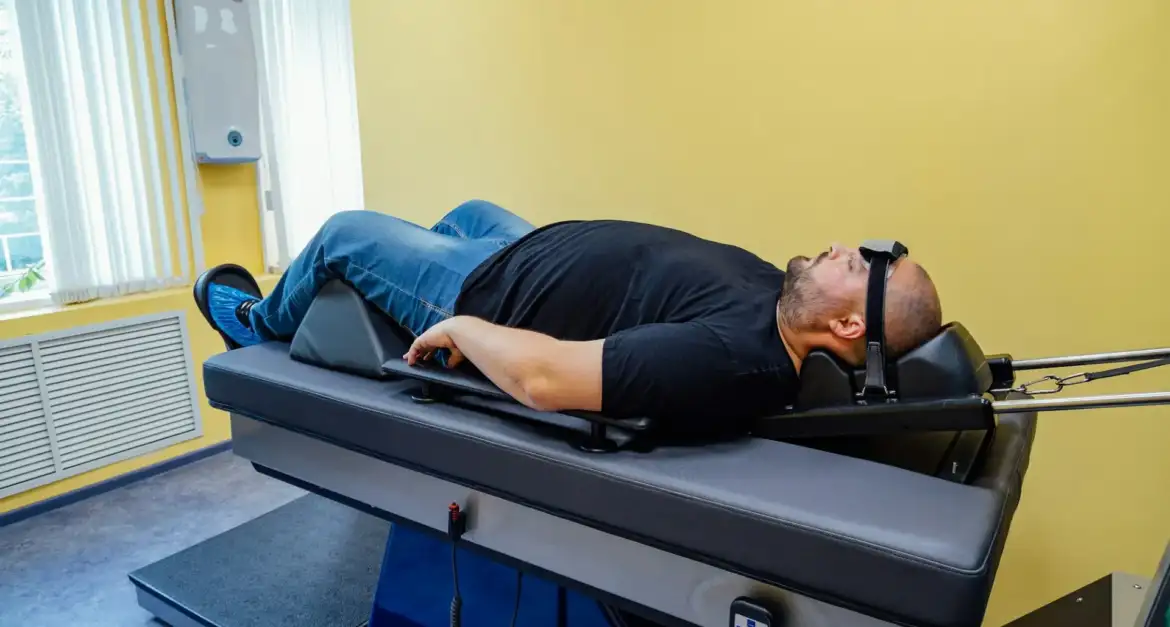
Spinal decompression treatment is a non-surgical, traction-based therapy that gently stretches the spine to relieve pressure on compressed discs and nerves. By creating negative intradiscal pressure, it promotes the retraction of herniated or bulging discs and facilitates the influx of oxygen, water, and nutrient-rich fluids, thereby accelerating natural healing.
Key Takeaways for Lasting Relief
- Targeted Pressure Relief: Shifts compressed spinal structures to instantly reduce mechanical stress on irritated nerve roots.
- Natural Disc Healing: Creates a vacuum effect that pulls vital nutrients back into damaged, dehydrated spinal discs.
- True Alternative to Surgery: Provides an effective treatment path for chronic back pain without incisions, scar tissue, or downtime.
- Versatile Conditions Treated: Successfully addresses sciatica, spinal stenosis, facet syndrome, and failed back surgery syndrome.
Living with Chronic Back Pain Stops Today
Living with chronic back pain can make your world feel incredibly small. Simple habits like tying your shoes, sitting at an office desk, or driving down the Las Vegas Strip suddenly turn into daily endurance tests. When you are trapped in a cycle of constant shooting pain or persistent numbness, it feels like your only options are lifestyle-altering surgeries or a lifetime of heavy prescription medications.
Fortunately, modern medicine offers a much better path forward. At The Spine Center, we specialize in advanced, non-surgical protocols that pinpoint the root cause of your discomfort. Non-surgical back pain relief is no longer a temporary bandage; it is a predictable, clinically proven way to restore your baseline mobility. If you have been told that you simply have to “live with it,” it is time to explore how customized spinal decompression treatment can completely change your trajectory.
The Science of Decompression: How It Works
To understand why this protocol is so successful, we have to look at the mechanics of the human spine. Your spinal discs act as jelly-filled shock absorbers between your vertebrae. Over time, poor posture, heavy lifting, or acute injuries can cause these discs to compress, bulge, or herniate.
| Phase 1: Spinal Compression | Phase 2: Spinal Decompression | Phase 3: Healing Vacuum Effect |
| Compressed Disc
(Nerves Pinched) |
➔ ➔ ➔
(Gentle Stretching) |
Vacuum Effect Created
|
When a disc herniates, it presses directly against the sensitive spinal nerves surrounding it. This structural breakdown is the primary trigger for severe local inflammation and radiating sciatic pain.
Clinical Validation for Disc Regeneration
The magic of computer-controlled spinal decompression lies in a physical principle known as negative intradiscal pressure. Traditional traction can sometimes cause your muscles to automatically spasm and resist the stretch.
Modern decompression technology bypasses this defense mechanism by using specialized logarithmic curves to distract the spine gently. According to extensive clinical data compiled by the Mayo Clinic, this controlled distraction creates a localized vacuum effect within the intervertebral space.
Clinical Fact: This negative pressure physically draws the displaced herniated disc material back into its proper boundaries, immediately taking the pressure off of your irritated nerve roots.
Furthermore, this vacuum action sucks fresh oxygen, hydration, and healing nutrients directly into the disc. Because spinal discs lack a dedicated, direct blood supply, this mechanical pumping action is vital for long-term tissue repair.
Conditions We Treat Successfully
Our clinical team uses this precise technology to address a wide array of debilitating spinal conditions. If you are struggling with any of the following diagnoses, you are likely an ideal candidate for this therapy.
Herniated and Bulging Discs
A bulging disc is like a tire that is slowly losing its shape under too much weight, while a herniated disc involves an actual tear in the outer ring. Our targeted herniated disc therapy focuses directly on the specific spinal segment involved, allowing the outer disc wall to heal naturally.
Sciatica and Radiating Leg Pain
Sciatica occurs when the nerve roots that form the sciatic nerve become pinched or inflamed. This leads to a burning, electric-shock sensation traveling down your glutes, thighs, and calves. By opening the neural foramina—the tiny openings for your nerves—decompression stops the shooting pain in its tracks.
Degenerative Disc Disease (DDD)
As we age, our spinal discs naturally lose water content and begin to thin, bringing the bony vertebrae closer together. Decompression therapy forces hydration back into the disc matrix, restoring vital disc height and flexibility.
Spinal Stenosis and Facet Syndrome
Stenosis involves the narrowing of the spinal canal, while facet syndrome involves inflammation of the small joints connecting your vertebrae. Both conditions create intense localized stiffness and pain. Gentle, repetitive mechanical stretching unloads these arthritic joints, giving you immediate breathing room.
The Non-Surgical Edge: Why Choose Decompression
Opting for a conservative, non-surgical route should always be your first line of defense before considering an operating room. The benefits of choosing a specialized mechanical treatment plan extend far beyond avoiding a surgeon’s scalpel.
The True Costs of Spinal Surgery
- Zero Surgical Downtime: Traditional spinal fusions or laminectomies require months of painful post-operative recovery and rehabilitation. Decompression sessions require absolutely no downtime, allowing you to return to your normal daily routine right away.
- No Scar Tissue Risks: Surgical interventions inevitably create internal scar tissue, which can sometimes bind to spinal nerves and cause a secondary condition known as Failed Back Surgery Syndrome.
- Completely Medication-Free: This protocol eliminates the need for heavy, habit-forming opioid painkillers or repetitive steroid injections, treating the structural source rather than masking symptoms.
- Exceptional Patient Safety: Because there is no general anesthesia or risk of hospital-acquired infections, the overall safety profile of this therapy is unmatched.
What to Expect During Your Treatment Sessions
Walking into a clinic for a new treatment can feel intimidating if you do not know what lies ahead. Let us pull back the curtain on what a typical day looks like on our decompression floor.
The Setup and Technology
When you arrive, you will remain fully clothed throughout the entire process, so we recommend wearing loose, comfortable attire. You will be comfortably fitted with two specialized harnesses: one around your lower ribcage and another around your pelvis.
Following the setup, you will be positioned on our state-of-the-art, computer-controlled decompression table. Your dedicated practitioner will then program your precise clinical data into the platform, tailoring the traction angles and tension levels to align perfectly with your physical build and specific spinal diagnosis.
The Sensation of the Treatment
As the session begins, you will feel a slow, deeply relaxing stretch through your lower back or neck. The table moves back and forth in precise, automated cycles, alternating between gentle tension and brief periods of relaxation.
Most of our patients find the experience so deeply soothing that they routinely read a book, listen to music, or even drift off to sleep during their care. A standard session lasts between 20 to 30 minutes, and a complete corrective care plan typically spans several weeks to ensure lasting structural stability.
Frequently Asked Questions
Is spinal decompression therapy painful?
Not at all. The treatment is engineered to bypass your body’s natural muscle-guarding mechanisms, ensuring a smooth, pain-free stretching sensation. Some patients report a mild, temporary muscle ache after their first few sessions as their deep structural muscles adjust to being elongated, similar to starting a new, light workout routine.
How many sessions will I need before I feel a difference?
While every spine is unique, many patients report a noticeable reduction in their nerve pain within their first six to ten sessions. However, complete structural healing of a damaged disc takes time, which is why finishing your full, prescribed clinical protocol is essential to prevent future relapses.
How am I a good candidate for this care?
If you suffer from chronic neck or back pain caused by a disc issue, sciatica, or joint degeneration, you are likely an excellent candidate. During your initial consultation, we will thoroughly review your medical history, perform a physical exam, and evaluate recent MRI films to confirm that this is the safest path forward for you.
Advanced Clinical Care You Can Trust
At The Spine Center, we believe that nobody should have to compromise their quality of life due to chronic, exhausting structural pain. Leading our state-of-the-art facility is a team of dedicated spinal care practitioners boasting over fifteen years of clinical excellence in non-surgical orthopedics and advanced disc rehabilitation protocols.
We combine decades of hands-on diagnostic experience with cutting-edge medical technologies to deliver predictable results that get our patients back on their feet. Proudly serving the vibrant Las Vegas community, our clinic is committed to providing compassionate, personalized care designed to help you reclaim your active lifestyle.
Take Your First Step Toward a Pain-Free Life
The bottom line is that you do not have to accept chronic back or neck stiffness as your permanent reality. Continually delaying treatment only allows spinal disc degeneration and nerve inflammation to progress further.
Contact The Spine Center today to schedule your comprehensive diagnostic consultation. Let our expert team build a tailored recovery plan that addresses your pain at its source, so you can finally move freely again.